
The Transatlantic Treasure Map: 88 Europe-originating Business Class fares priced from a third off to better than half – and the Upgrade Intelligence to claim them
Two tickets. One airplane.
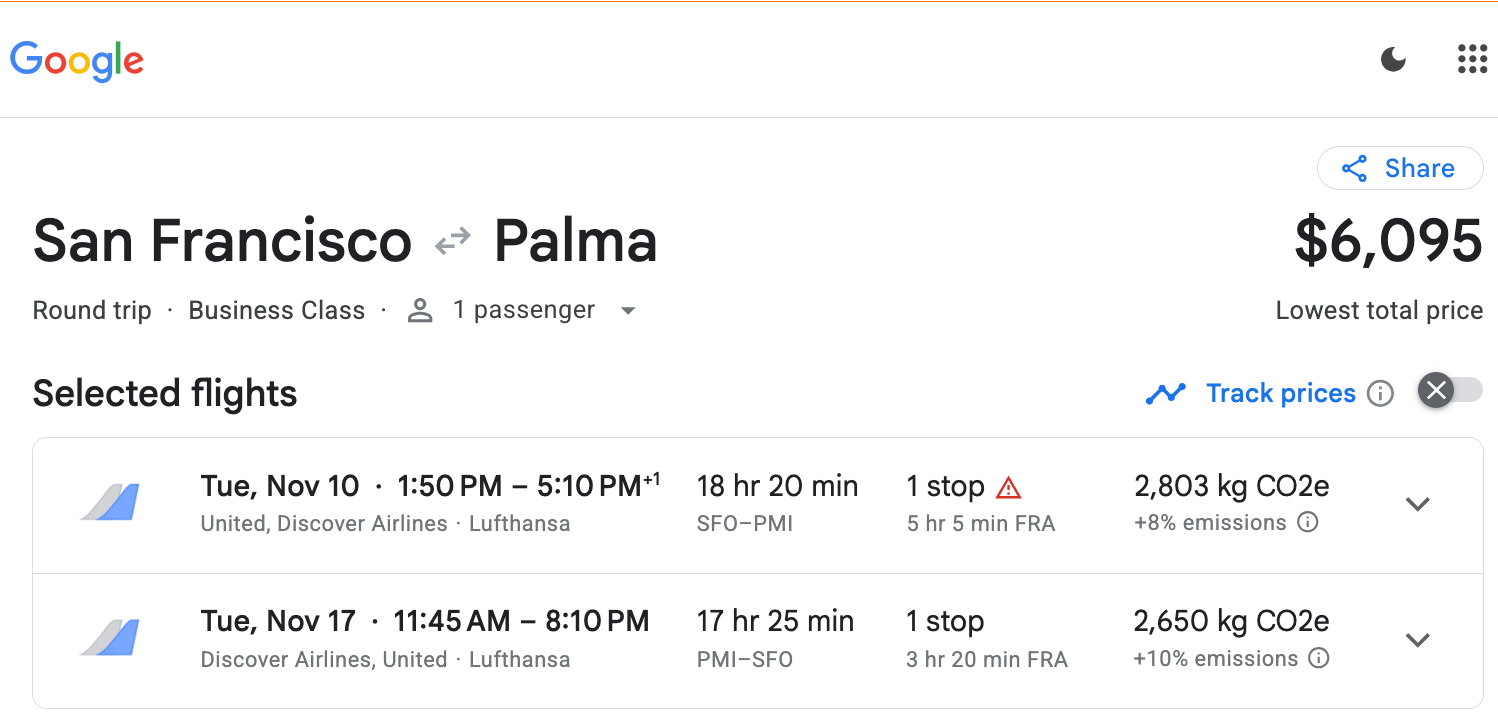
United sells San Francisco to Mallorca in Business Class – departing November 10, returning November 17 – for $6,095.
Flip the ticket and start in Mallorca, on the identical flights, on the identical two dates, and the price drops to $2,886.
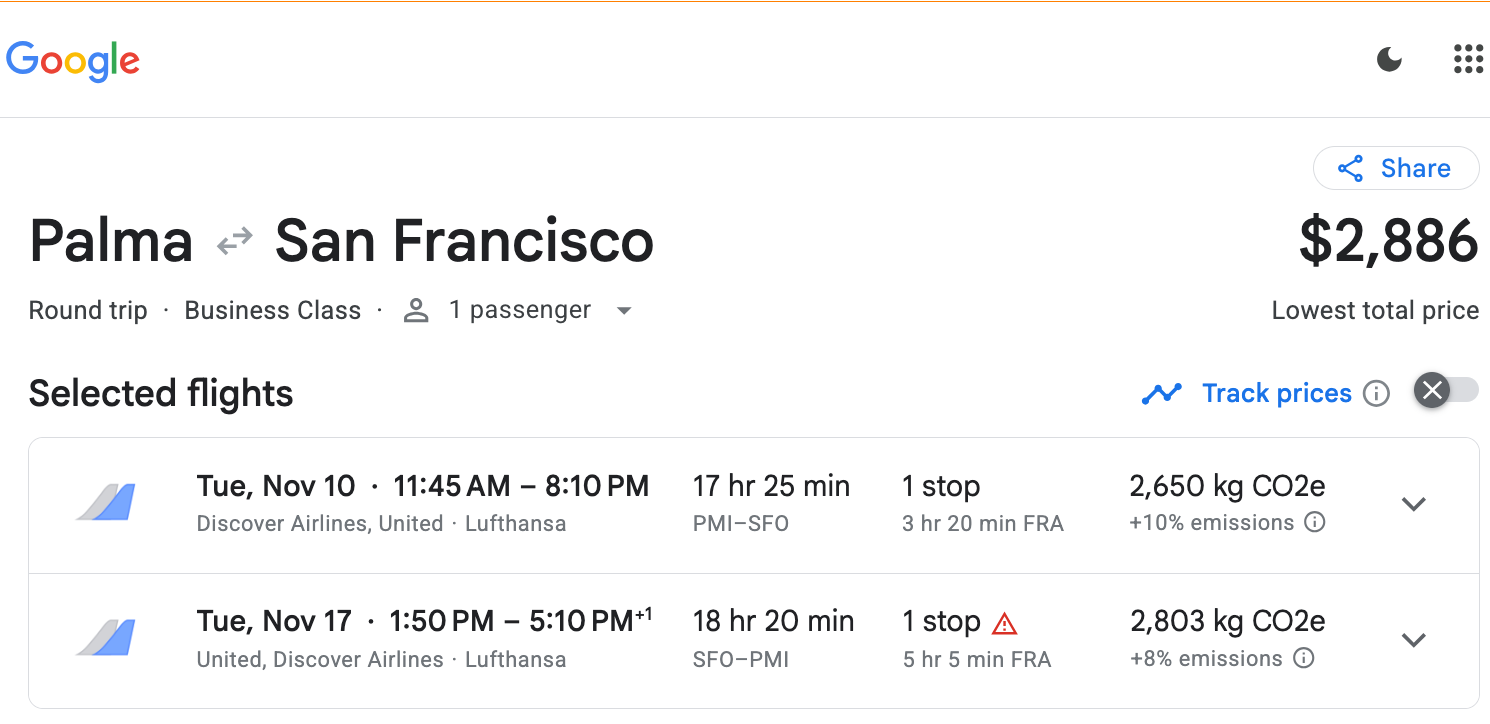
That is $3,209 back in your pocket for knowing which side of the Atlantic your ticket should begin. It is not a glitch. It is a pattern – and patterns are where Upgrade Intelligence pays.
Make sense? Then let's go treasure hunting.
Step 1: The Baseline That Beats the Booking Engine
The Upgrade Process begins with Baseline – seeing reality as it is, not as the airline's website frames it. Your baseline is where you are, and you are either informed or uninformed about it.
So goes your baseline, so goes your life.
And so goes your fare.
My team mapped the top 88 low-cost Business Class routes from Europe to nine major American gateways, from Boston to Los Angeles. Fifty-seven of them – nearly two out of three – price under $3,000 round-trip.
Those same tickets, bought with a U.S. starting point, routinely run $5,000, $6,000, even $8,000.
And this is not one airline's accounting quirk. Watch all three U.S. majors play the same pricing game:
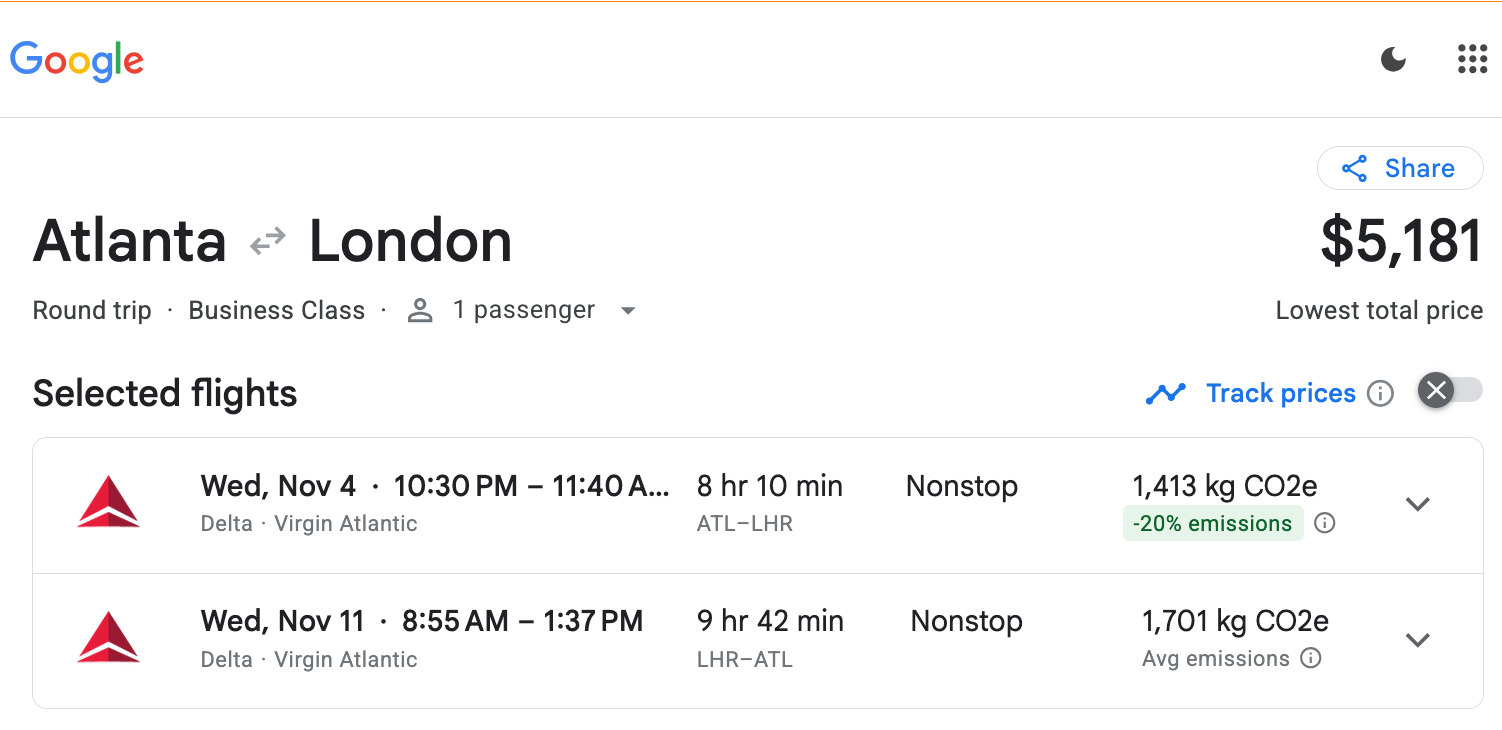
Delta sells Atlanta to London in Business Class – departing November 4, returning November 11 – for $5,181.
Flip the ticket and start in London, on the identical two nonstops, on the identical two dates, and the price drops to $3,437.
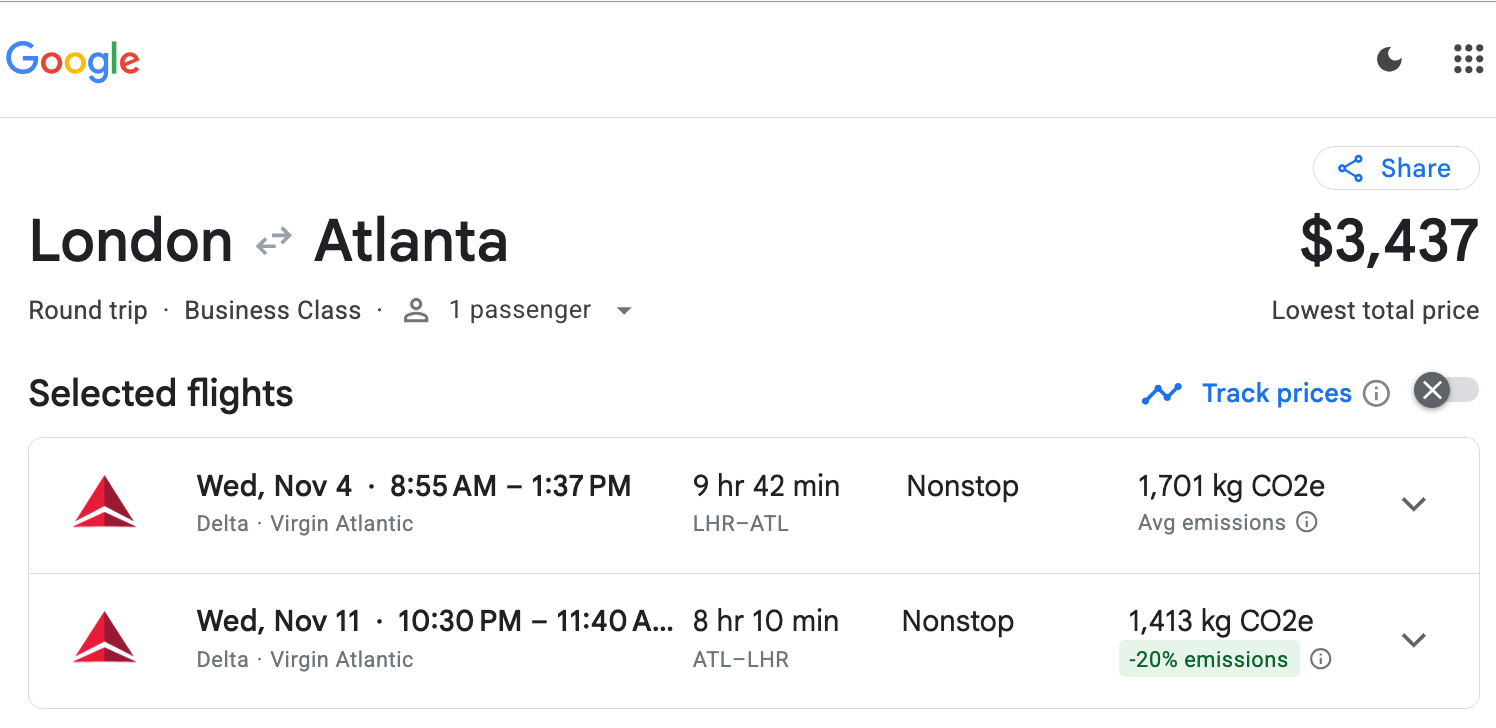
Same seat. Same service. Same metal crossing the same ocean.
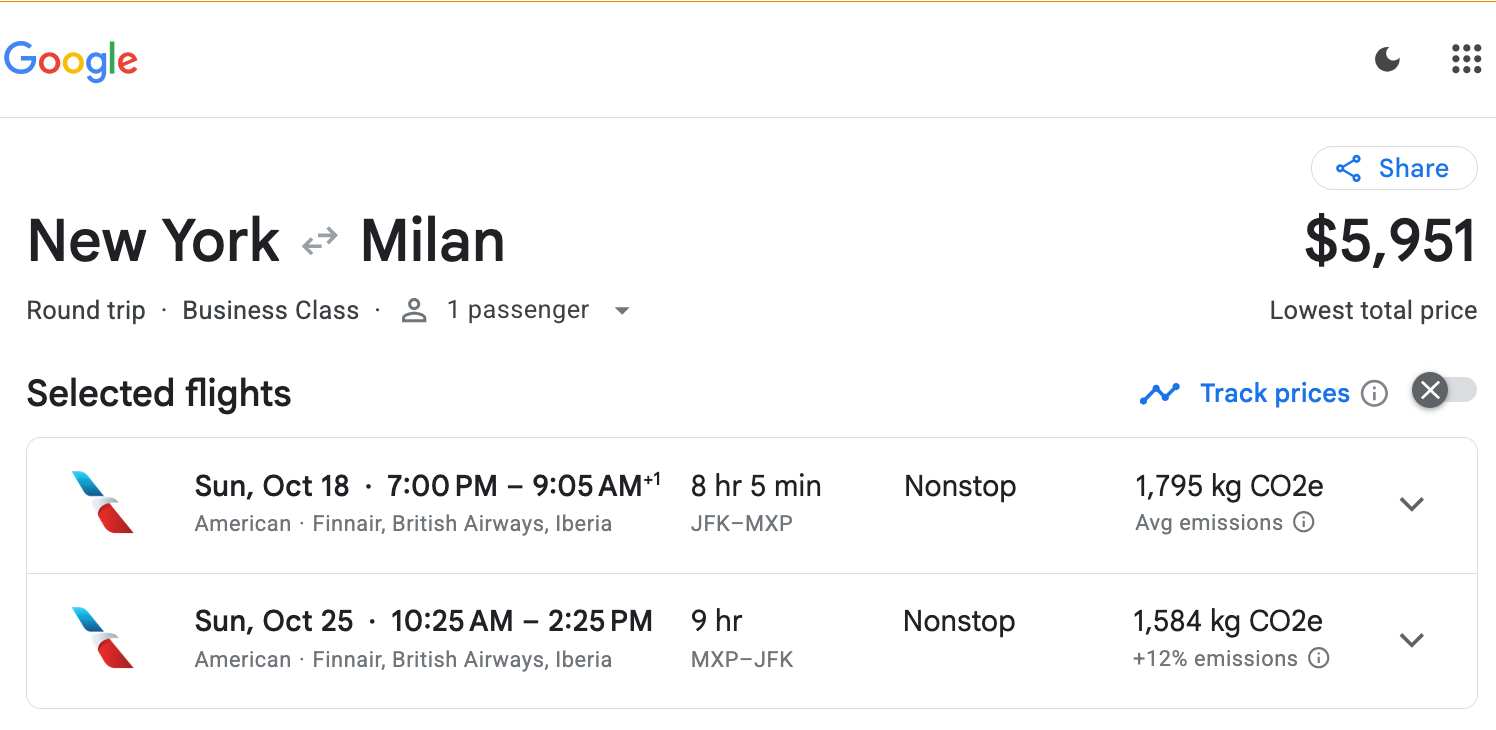
American: New York to Milan, $5,951.
Milan to New York, $3,148.
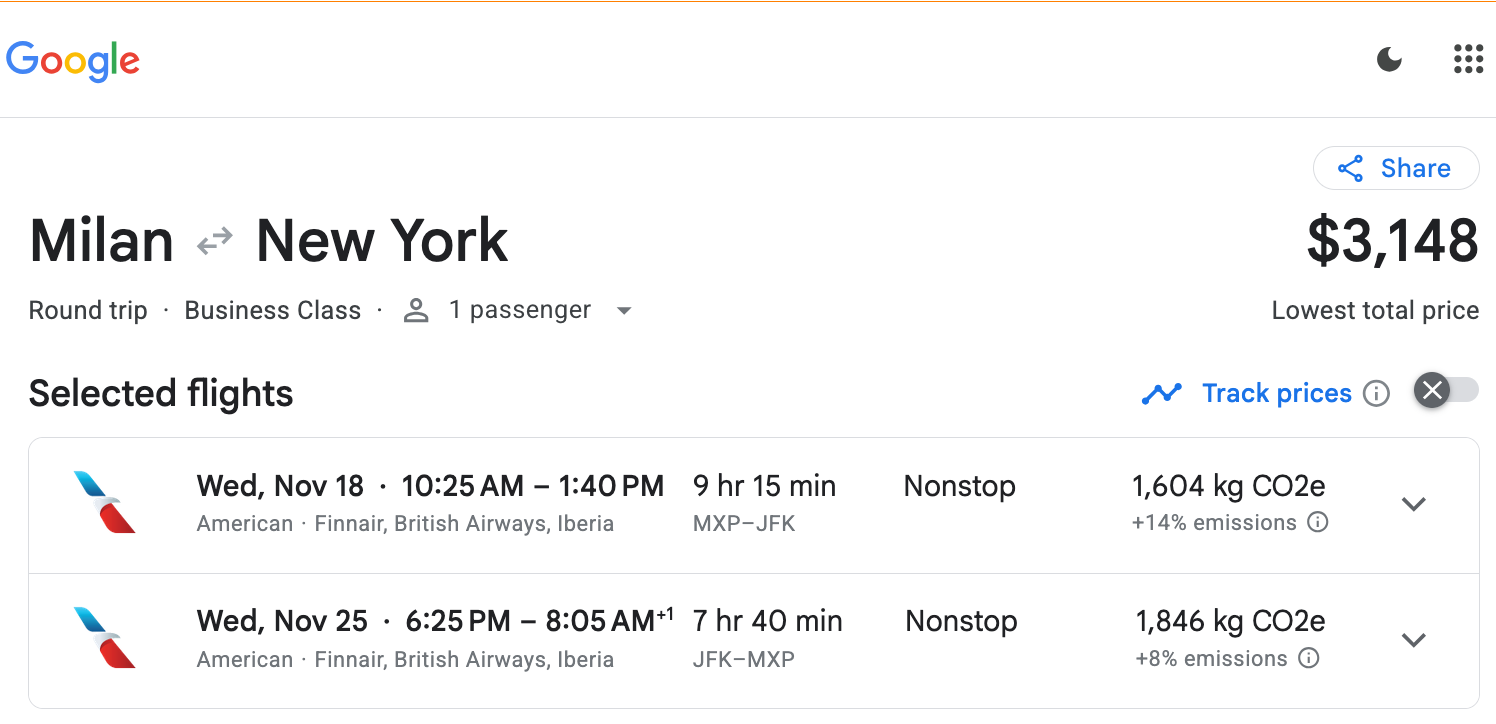
That is 47% off for starting your story in Italy.
A 54% saving – better than half.
Delta: the same proof as above, 34% off.
The fantasy says fares are fixed. The Baseline says fares depend on where the map reads “start here.”
The Treasure Map:
Where the Gold Is Buried
So where is the gold buried deepest?
Dublin and Madrid are the two cheapest launch pads on the entire map. Dublin to Boston runs $2,542 round-trip in Business Class. Madrid to Boston, $2,695.
Barcelona lands under $2,800 to Dallas, Houston, and Los Angeles. Mallorca – yes, a Mediterranean island – beats most of mainland Europe to nearly every gateway.
Sample round-trip Business Class fares found o mmajor airlines…
The Open Jaw: Why Round Trips Are for Rookies
Unless you’re a road warrior visiting the same office every quarter, or a parent making pilgrimages to the same college kid, are you really flying in and out of the same European city every trip? Of course not. Barcelona in the fall, Dublin in the spring – that’s the whole point of Europe.
Here’s the part the crowd never checks: The fare structure barely punishes you for it. Book the “round-trip” as an “open jaw” – fly European City A to the U.S., return from the U.S. to European City B – and the price barely moves. Sometimes it drops.
Madrid to New York, returning to Lisbon: $2,958 non-stop –$972 less than the straight Madrid round-trip.
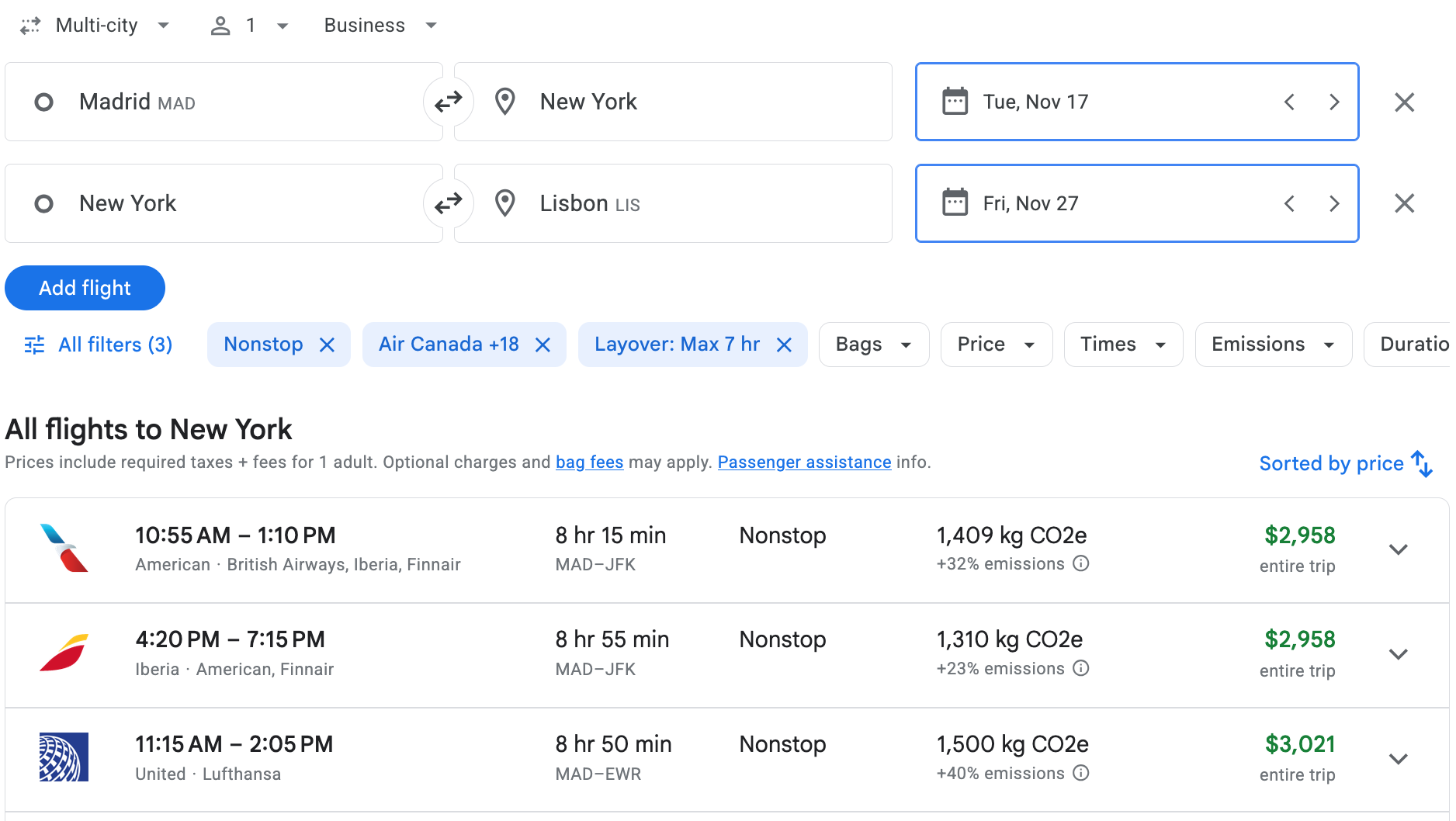
This strategy works especially well on routes where you have to make a connection anyway.
An open jaw isn’t a compromise; it’s a bonus move – the travel equivalent of castling in chess when two pieces are improved in a single turn.
In Upgrade Intelligence terms, this is Leverage Recognition – spotting the single decision (where the ticket starts and ends) that multiplies value across an entire year of travel.
Step 2: Desires Decide – Rank Them and Weigh Them
Here is where a travel deal becomes a micro course in The Upgrade Formula.
Step 2 of the Upgrade Process is Desires – naming what you truly want, then ranking the priority and weight of each want. The cheapest crossing? A flat seat? Or simply to stop overpaying for the very same seat?
Because economist Thomas Sowell was right: There are no perfect solutions, only trade-offs.
You can't have everything, so make your trade-offs at the desire level, not the decision level.
Get that ranking right and something remarkable happens. Your decisions get better, easier, faster – they practically make themselves.
And when you find yourself stuck?
Indecision is not a decision problem.
It is a lack of commitment to a number one desire.
Here, the trade is simple: a little planning – beginning your ticket in Europe – for savings that can top $3,000 per passenger.
Step 3: Load Your Options Like a Pro
A GPS needs two locations – where you are and where you're going. So does the Upgrade Process.
Step 3 is Options, and here it looks delightfully low-tech: time on Google Flights, playing with different dates and different city pairs, watching the prices move as the map moves.
Collect 5 candidate routes. Shortlist three that fit your calendar. Book one.
Desperate people don't lack options.
They lack the intelligence to see them – and deliberate option loading is how deliberate travelers beat desperate travelers every single time.
The Perspective Play
Perspective is a core competency of Upgrade Intelligence, so run the numbers in the other direction.
Many transatlantic round-trips in coach class run $2,000+ in high season these days. Upgrade to Business Class the ordinary way – buying a U.S.-originating fare – and the jump costs roughly $2,000 to $6,000+.
Plan ahead and start in Europe, and that same life-changing leap costs as little as ~$500 more.
Framed that way, the “expensive” cabin becomes the bargain buy with this process and strategy.
Step 4: You Don't Have to Decide Today
Here is the pressure release: You don't need to decide today. You just need to know your options, because every option you see makes your baseline richer. And in life, everything revolves around your baseline.
Decisions emerge from your greatest desire. Once your number one is named, the choosing takes care of itself.
Step 5: Implementation – Three Rules to Remember
One: The fare must originate in Europe. Buy it as its own round-trip – Europe to America and back to Europe.
Two: Position with purpose. Use a cheap one-way, a mileage award, or a trip you already planned to get yourself to Dublin, Madrid, or Barcelona before the ticket starts.
Three: Move with measured speed. These fares are snapshots; they will change or vanish without notice. When your shortlisted fare surfaces, book it. Or hold it.
The Bottom Line
The same ocean. The same airplane. The same Champagne.
One passenger paid $6,095 because the fantasy told him fares are fixed. Another paid $2,886 because the Treasure Map told her that where a ticket originates decides what a ticket is worth.
That gap isn't luck. It's Upgrade Intelligence – Baseline seen, Desires ranked, Options loaded, Decisions pre-made, Implementation executed.
The treasure is on the map.
All you have to do is read it.
The Transatlantic Treasure Map: 88 Europe-originating Business Class fares priced from a third off to better than half – and the Upgrade Intelligence to claim them
Two tickets. One airplane.
United sells San Francisco to Mallorca in Business Class – departing November 10, returning November 17 – for $6,095.
Flip the ticket and start in Mallorca, on the identical flights, on the identical two dates, and the price drops to $2,886.
That is $3,209 back in your pocket for knowing which side of the Atlantic your ticket should begin. It is not a glitch. It is a pattern – and patterns are where Upgrade Intelligence pays.
Make sense? Then let's go treasure hunting.