
And why convenience-focused travelers love mixed airline itineraries…
Connections matter. Just ask the NYPD detectives in the hit crime thriller, “The French Connection.”
They matter to flyers, too, bigtime — especially if they increase your inconvenience on a trip.
convenience is similar in importance to
flying comfort as a cushier seat
It’s one more way you can make your traveling life easier. The trick is to find flight connections (when the itinerary dictates, anyway), that work for you — not the airline.
Savvy travelers know this, so they take a step back to get a more holistic view of their trip. They consider things like time of day for connections and layover times and factor it all into their planning.
Savvy-challenged travelers (most people) on the other hand, just buy a standard round-trip ticket and put up with the inconvenience of taking the default option. Hint: default options generally always favor the airline.
Planning isn’t so critical for shorter flights. But for longer ones, say, across the Atlantic, it can have a huge impact on your cranky-meter.
Flight Smarts 101:
Connect Early
In this report, I’m talking about where and when your connections take place for a longer trip. If you’re like me, the last thing you want is to make it through a long overnight flight only to face a dreaded connection when you land. You’re tired. You’re sick of flying (even if it’s a nice Business or First Class experience). You’re eager to go home or reach your final destination.
My solution? When you do have to connect, mix and match carriers for a more convenient, comfortable trip.
You do this by booking each segment so that the connection is early in the trip, not at the end.
By changing carriers to better serve your needs, you’re the one who’s in control, not the airline. This goes against some misconceptions I hear a lot: that you have to fly on your favorite airline round-trip (that will eliminate good opportunities, trust me); that you might pay more money (look at our examples below, one costs just $47 more, another $2 more and the last actually saves you $1,494); or that you won’t earn miles (you will as long as you stay within the airline alliance when you fly a code-share flight marketed by your airline).
Bottom line: You don’t have to accept the inconvenient situation that standard round-trip tickets burden you with. There is another way. Let’s look at some examples.
Oneworld Example:
You live in Austin and want to go to Amsterdam
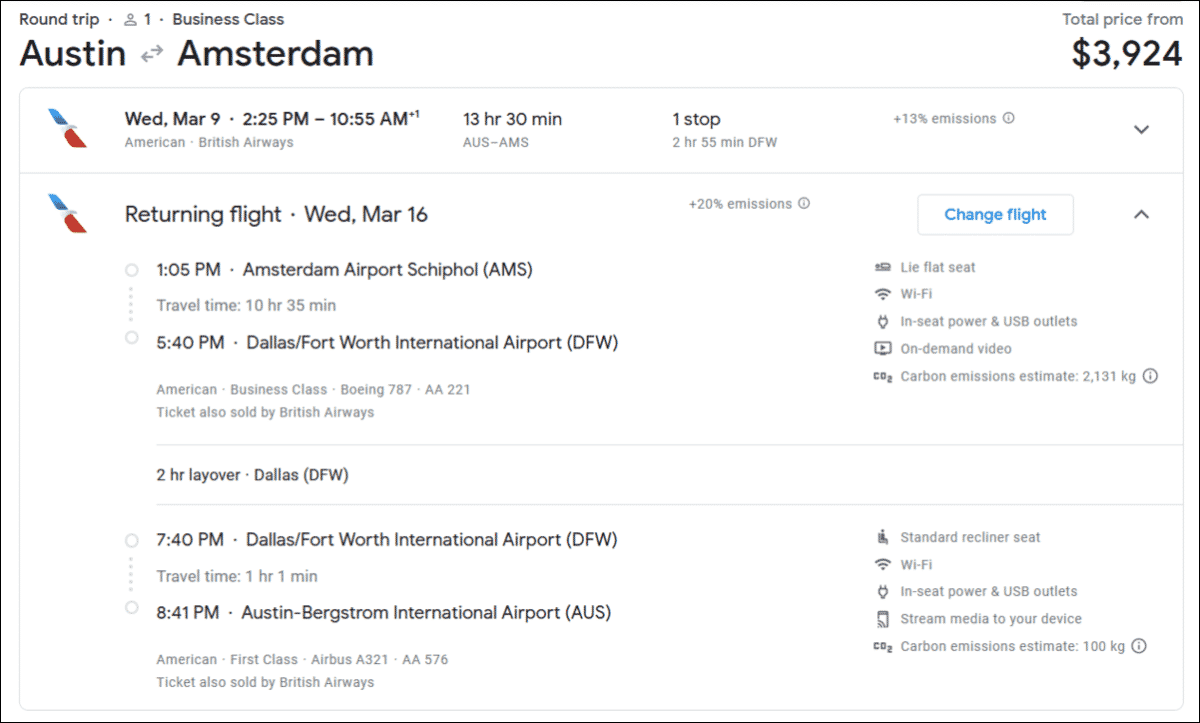
In the example below, the inconvenient truth lies in the return segment. After 10 hours of flying (Amsterdam-Dallas on American), you feel exhausted. You have to collect your bags if you checked them, go through security all over again, and schlep your way to another terminal to catch your flight back home to Austin. Sounds like fun — NOT.
Or you could fly British Airways through London on the way home for about 47 bucks more and get the connection out of the way early, before arriving back in Austin after the long flight and going straight home.
Taxi!
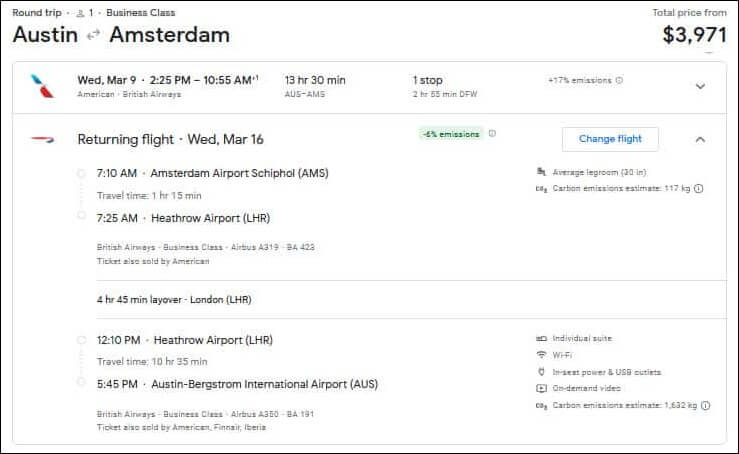
Connecting at the front end, when you’re fresh, is waaaay better.
Star Alliance Example:
You live in Denver and want to go to Madrid.
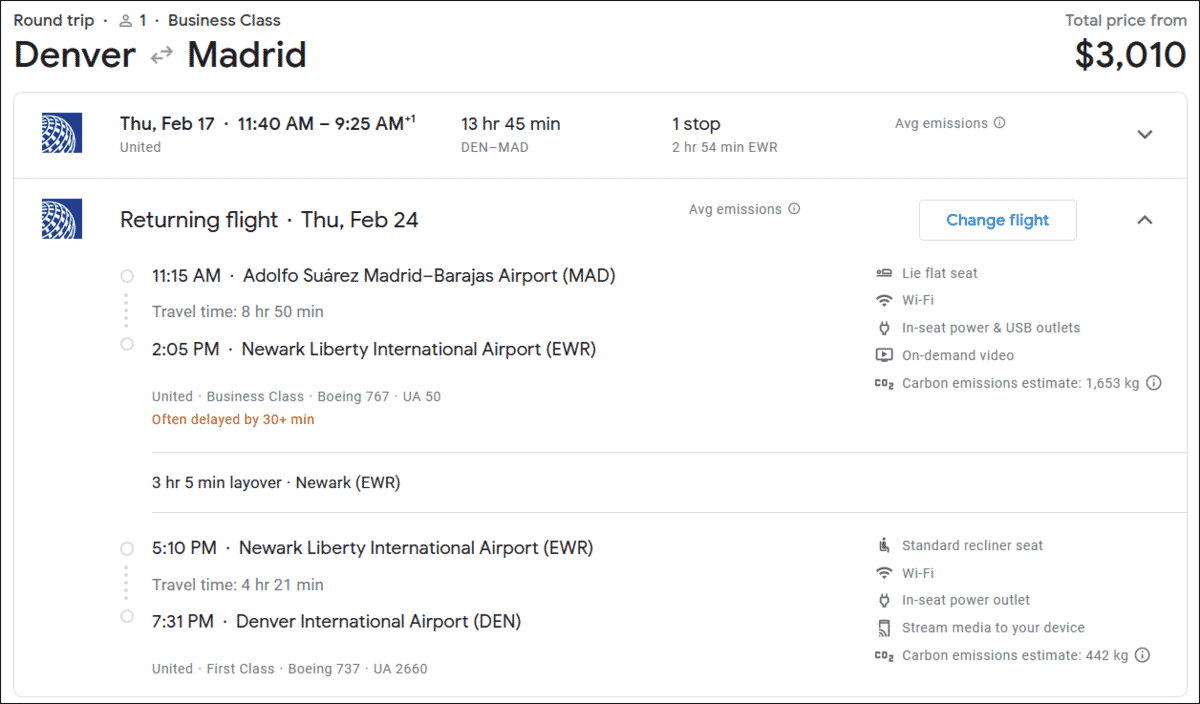
Here again, you could accept the standard round-trip ticket on United and endure 9 hours of flying into Newark (I don’t care if you are in Business Class, that’s a long time in the air) before then having to jump on a connection to get home to Denver. Evidence below.
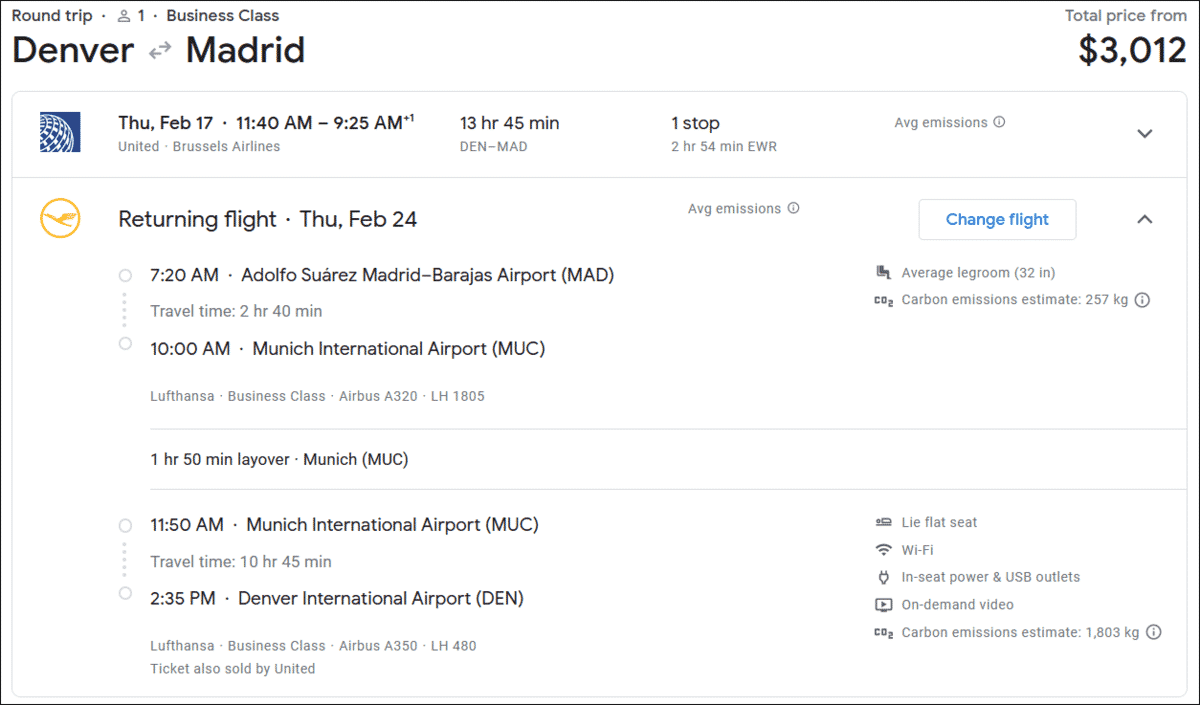
Or for about 2 bucks more you can switch your airline to Lufthansa and front-load that connection (Madrid-Munich, just a couple hours or so flight) before flying straight home to Denver, as shown below.
SkyTeam Example:
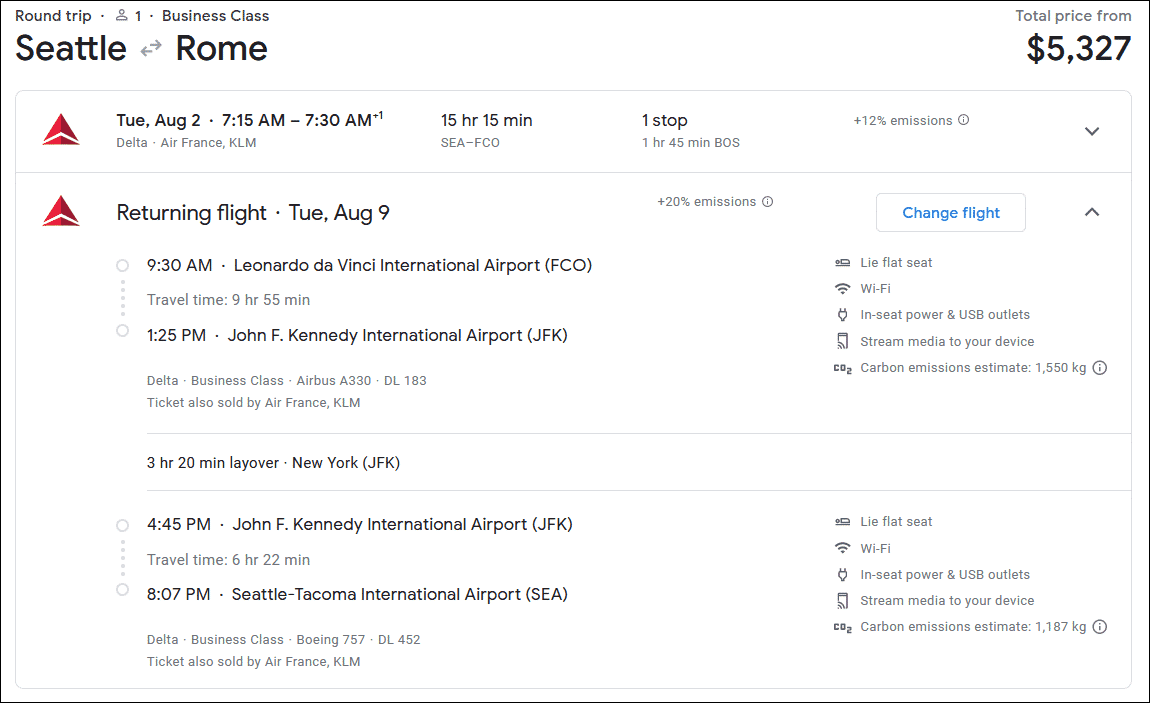
You live in Seattle and want to go to Rome.
We’re talking some serious distances here, so even more reason to make the connection work for you. In the typical schedule below, you arrive in the U.S. after a 10-hour flight from Rome to New York on Delta, only to drag yourself to a connection back home.
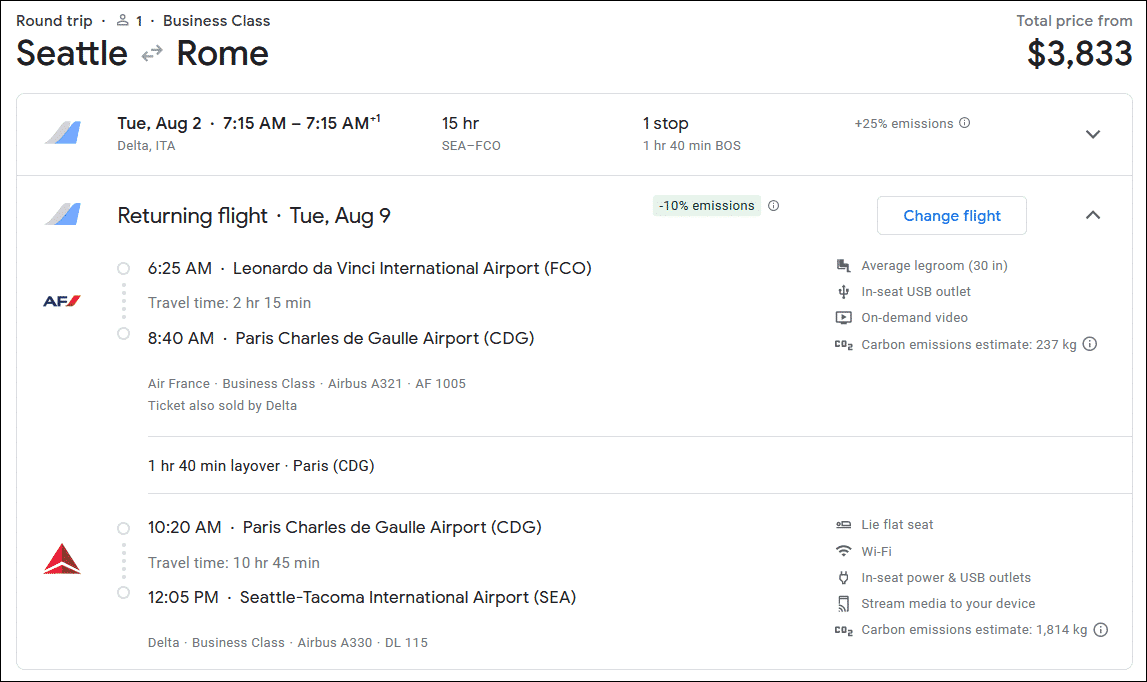
Or you can switch your airline to Air France and front-load that connection (Rome-Paris, just 2 hour or so flight) before flying straight home to Seattle, as shown below. And on top of that, you’ll have a couple hundred dollars more in your wallet. Talk about convenience.
To learn more about “downgrading” your Business Class seat to intelligently save money, read our Mixed Cabin article found here and here.
And why convenience-focused travelers love mixed airline itineraries…
Connections matter. Just ask the NYPD detectives in the hit crime thriller, “The French Connection.”
They matter to flyers, too, bigtime — especially if they increase your inconvenience on a trip.
convenience is similar in importance to
flying comfort as a cushier seat
It’s one more way you can make your traveling life easier. The trick is to find flight connections (when the itinerary dictates, anyway), that work for you — not the airline.
Savvy travelers know this, so they take a step back to get a more holistic view of their trip. They consider things like time of day for connections and layover times and factor it all into their planning.
Savvy-challenged travelers (most people) on the other hand, just buy a standard round-trip ticket and put up with the inconvenience of taking the default option. Hint: default options generally always favor the airline.
Planning isn’t so critical for shorter flights. But for longer ones, say, across the Atlantic, it can have a huge impact on your cranky-meter.
Flight Smarts 101:
Connect Early
In this report, I’m talking about where and when your connections take place for a longer trip. If you’re like me, the last thing you want is to make...